How to Choose the Right Plastic Material for Custom Extrusion Profiles
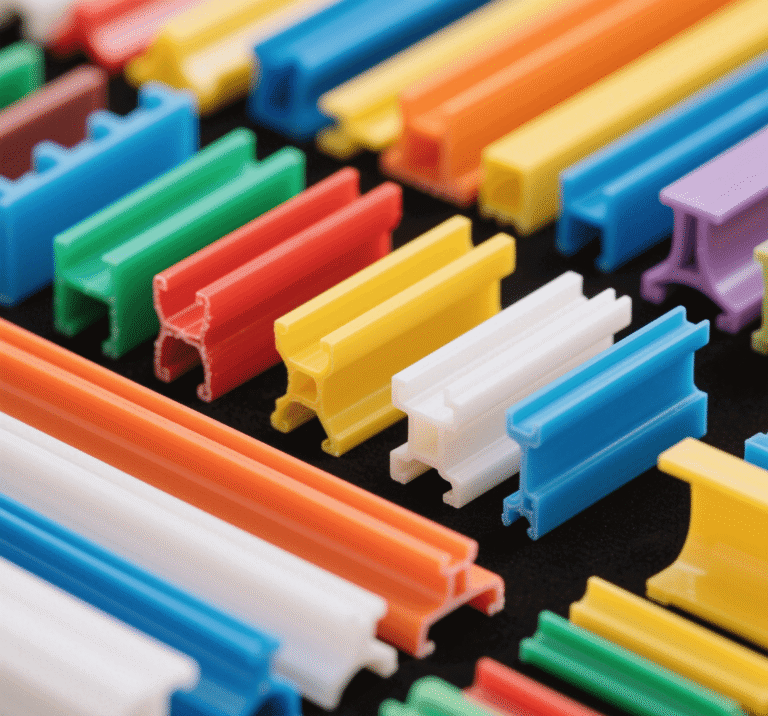
Material selection is one of the most important steps in any custom extrusion project. Even with a well-designed profile, the wrong material can lead to poor performance, difficult processing, unstable dimensions, or higher overall cost. For customers developing custom extrusion profiles, understanding the differences between common materials is essential.
Why Material Selection Matters
In plastic extrusion, the material affects more than just strength or appearance. It also influences process stability, dimensional consistency, assembly performance, and long-term durability. A material that performs well in one application may not be suitable for another. That is why material choice should always be based on actual product requirements, not only price.
Common Materials Used in Extrusion
PC
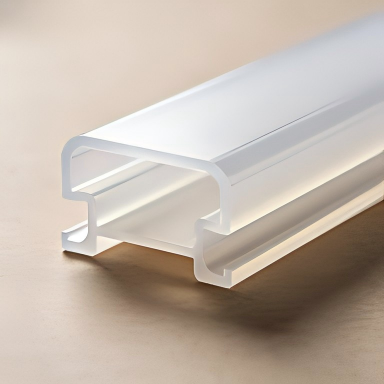
PC is often selected for applications that require transparency, impact resistance, and good dimensional stability. It is widely used in lighting diffusers, protective covers, and structural parts where clarity and strength are both important.
PVC
PVC is one of the most commonly used extrusion materials because of its versatility and cost efficiency. It offers good insulation performance, stable processing, and broad application flexibility. It is often used in electrical profiles, decorative trims, construction accessories, and various functional extrusions.
ABS
ABS is suitable for products that require good toughness, surface quality, and structural performance. It is often used in industrial parts, appliance components, and custom structural profiles.
PE
PE is valued for its flexibility, chemical resistance, and lightweight properties. It can be used in protective profiles, simple functional parts, and applications where softness or basic durability is needed.
PP
PP offers good chemical resistance, relatively low weight, and practical performance for many industrial and utility applications. It is often used in custom profiles that need a balance between functionality and economy.
Key Factors to Consider
When choosing a material for custom extrusion, customers should usually consider the following:
- Mechanical strength requirements
- Surface appearance expectations
- Transparency or color needs
- Electrical insulation performance
- Indoor or outdoor environment
- Assembly and post-processing requirements
- Cost target and production volume
Material Selection Should Match the Process
In many cases, material selection also needs to match the manufacturing method. For example, some materials are better suited for co-extrusion, while others perform better in standard single-material extrusion. If punching, printing, laminating, or assembly is required after extrusion, this should also be considered early in the project.
A Practical Engineering Approach
In real projects, the best material is usually the one that balances performance, manufacturability, and cost. Instead of choosing only by datasheet values, it is better to evaluate the product structure, application environment, and delivery needs together. This helps avoid repeated changes in the later stages of tooling, sampling, or mass production.
Conclusion
Choosing the right plastic material is not just a purchasing decision. It is an engineering decision that directly affects product quality, production efficiency, and long-term reliability. For custom extrusion projects, early material evaluation can save time, reduce risk, and improve the success rate of development.
If you are working on a custom profile and are not sure which material is most suitable, it is often helpful to evaluate the application, structure, and process requirements together before moving into tooling and sampling.